Now accepting founding pilot organizations
Your team says they're aligned.
Pulse Connect shows you if they actually are.
Pulse runs structured check-ins, surfaces exactly where alignment breaks down, and equips your team to close the gap before it shows up in your results.
PULSE PLATFORM
Activity Feed
28%
of leaders responsible for executing strategy can name three of their organization's strategic priorities
MIT Sloan Management Review
95%
of employees cannot describe their own organization's strategy
Kaplan & Norton, Harvard Business Review
22%
of employees strongly agree their leaders have a clear direction for the organization
Gallup
Who this is for
Three people usually feel this first.
Different words, same gap underneath. Pulse Connect measures whether the direction reached the people who have to execute it.
Take the free assessment
The operator
You run the company week to week.
The priorities are set and the leadership team is bought in. What you cannot verify is whether the sixty people underneath are working from the same picture. You find out in the quarterly, one quarter too late.
See where this fits
The founder
You set the direction and assume it travelled.
You have said it in every all-hands for two years. People nod. Then a decision three levels down tells you it never landed, and you cannot tell whether that was one person or the whole company.
See where this fits
The advisor
You installed the system and it stopped at the top.
Your client’s leadership team runs the rhythm well. Below them, comprehension thins out and you have never had data for it. We give you the instrument and stay out of your practice.
Partner with usWhat's inside Pulse
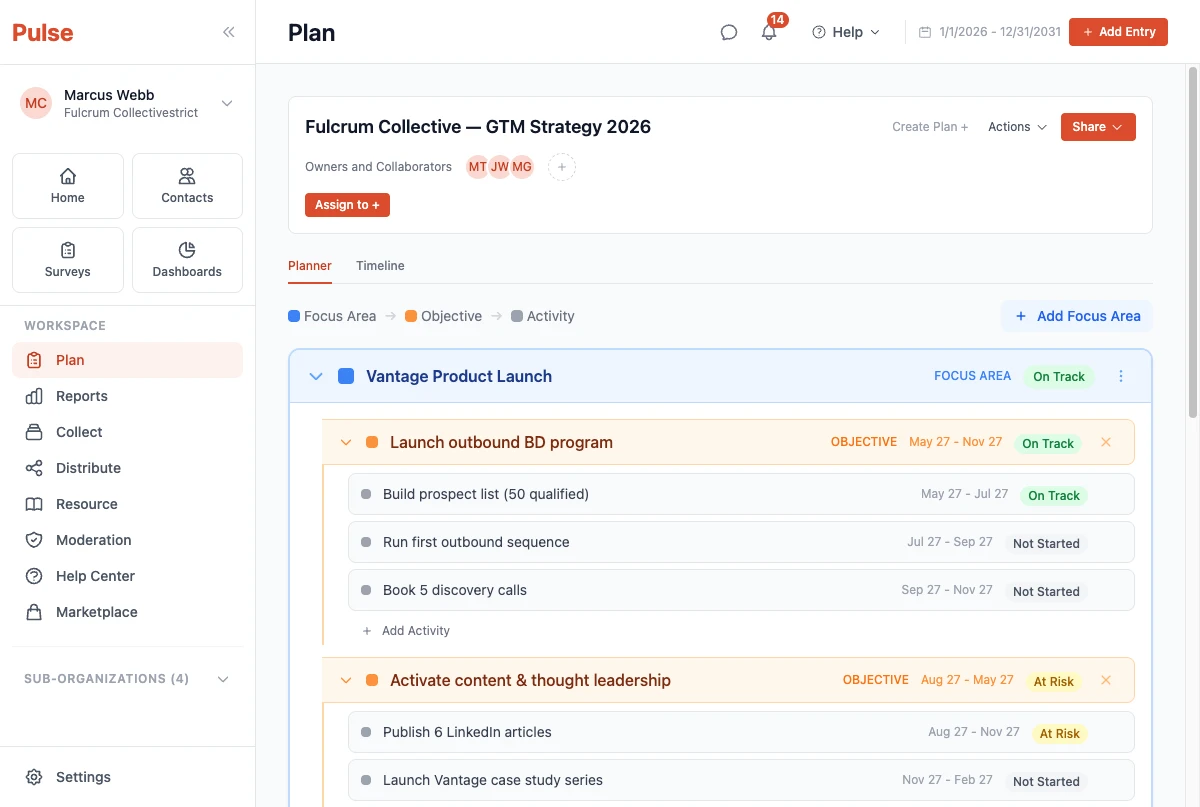
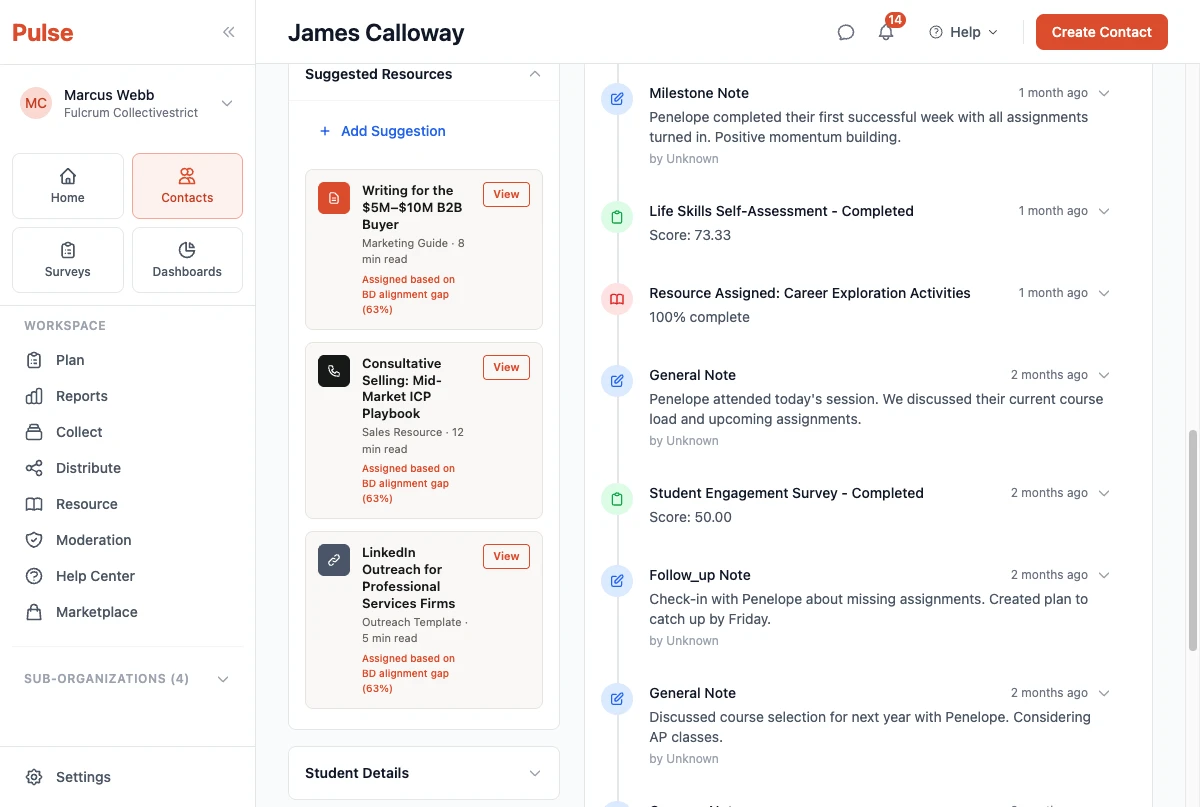
Five views. One complete picture of your organization.

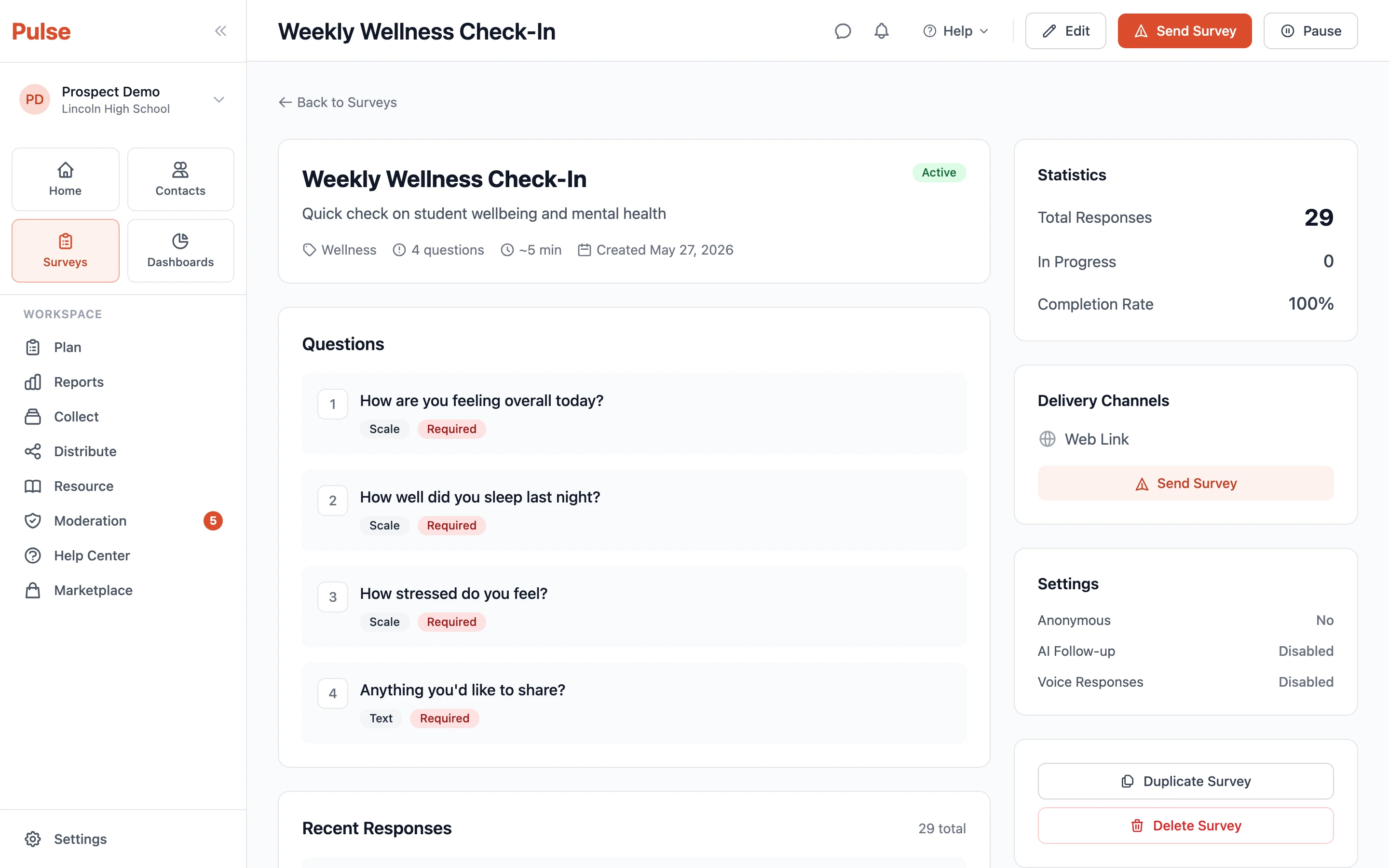
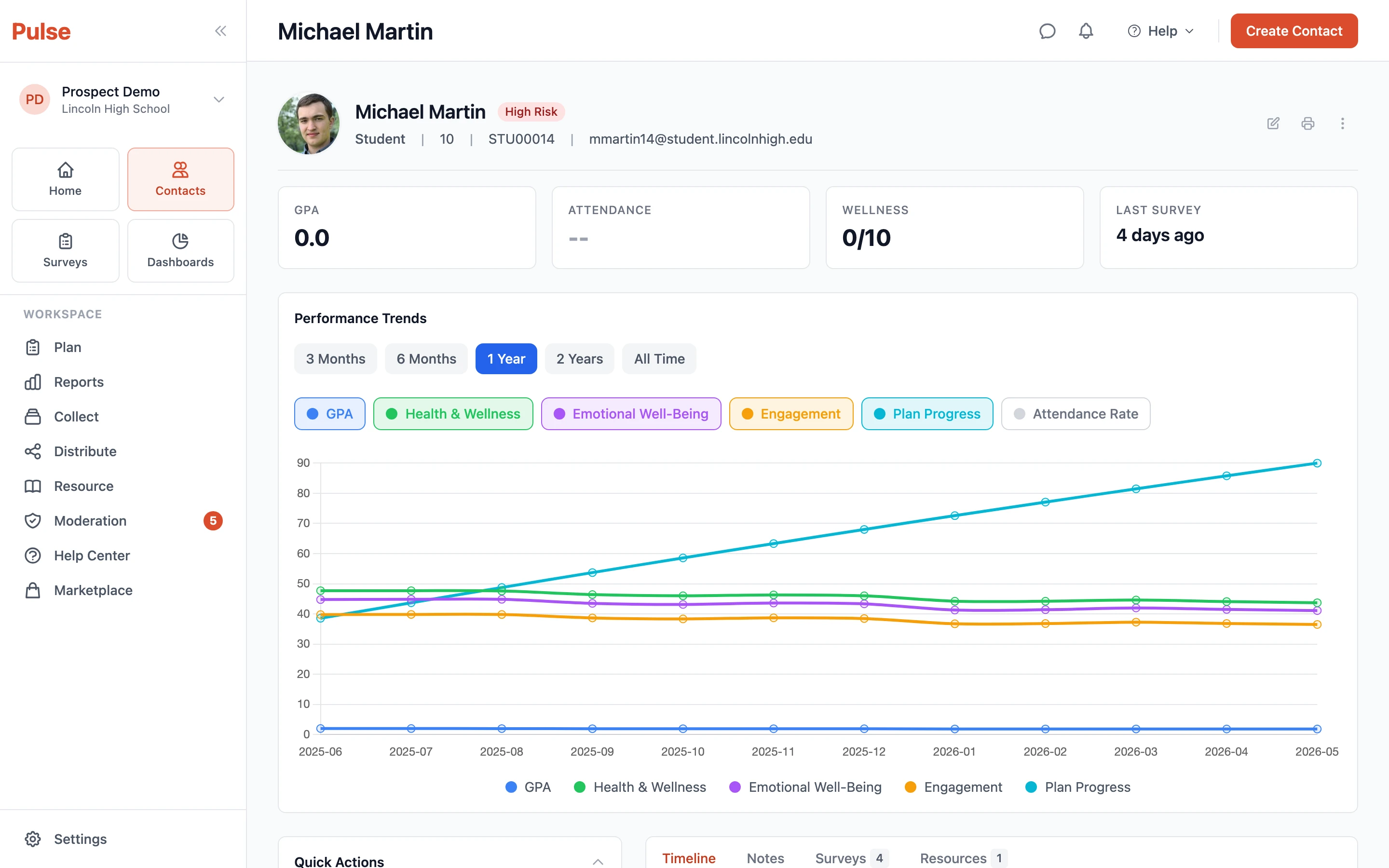
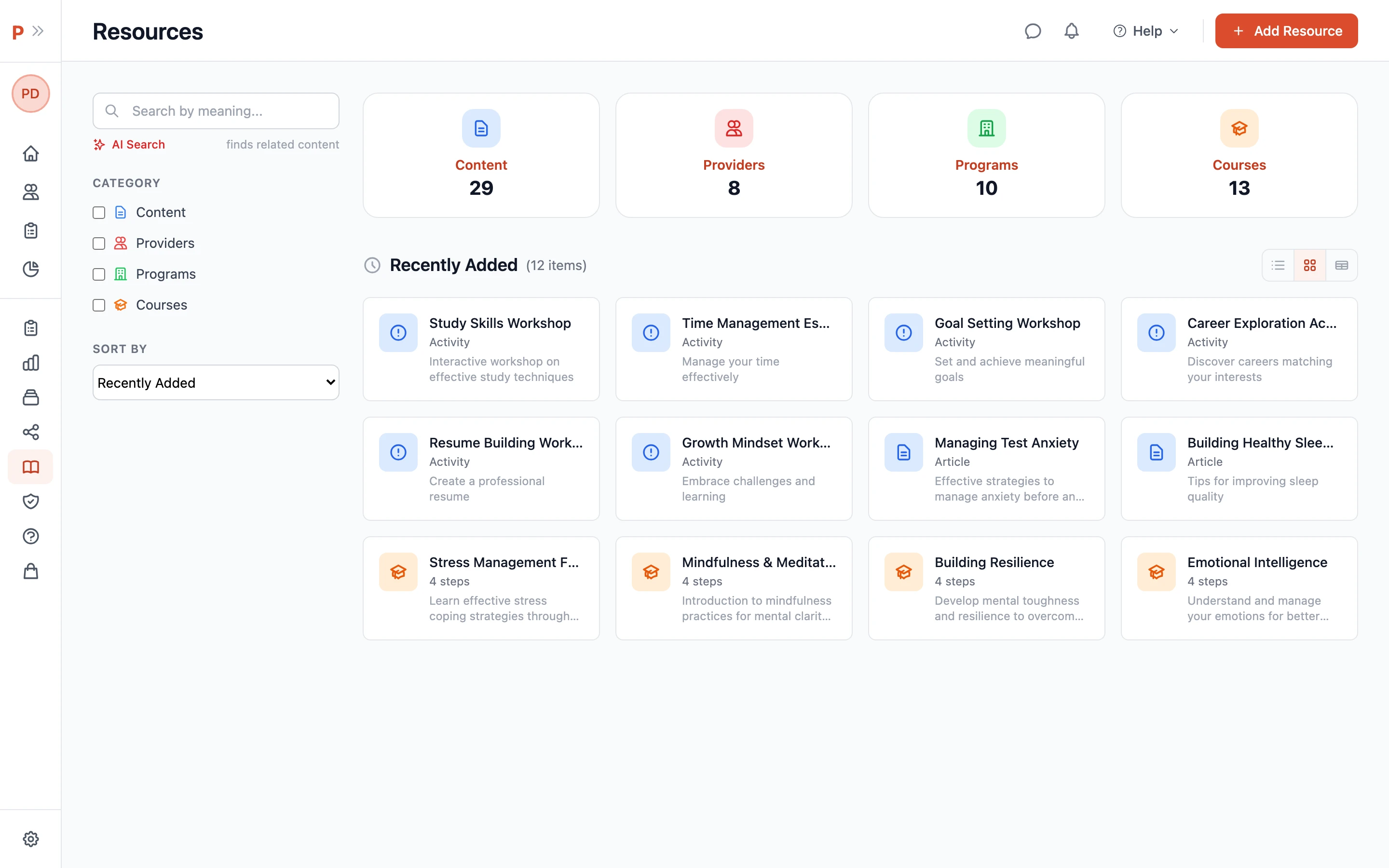
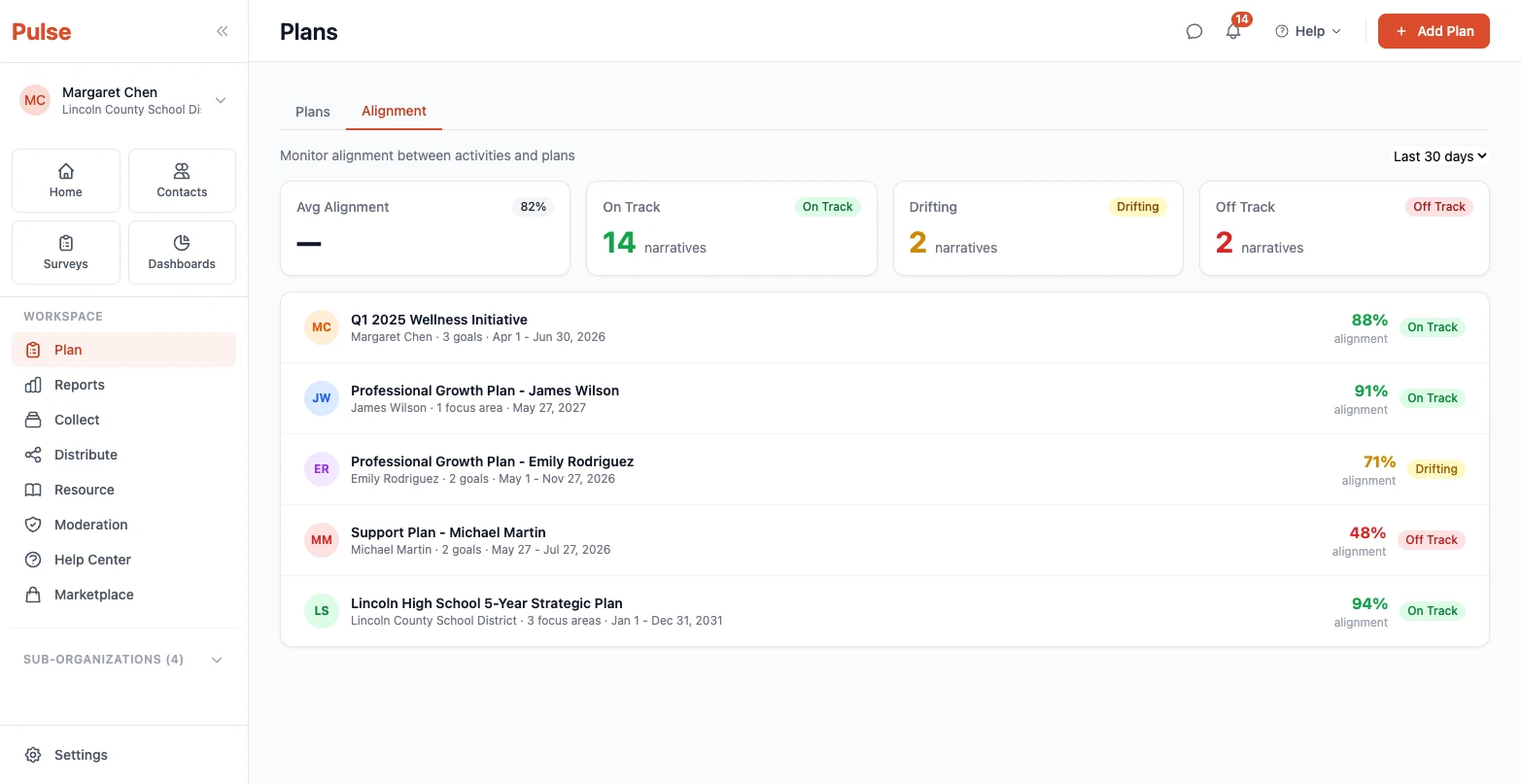
What deployment looks like
Five steps. Your team only ever sees step two.
Nobody below your leadership team adopts a dashboard, learns a system, or changes how they work.
We map your priorities.
Whatever you already call them. Pulse Connect organizes what you are actually trying to accomplish this year and attaches ownership at the priority level.
Your team answers a short check-in.
Targeted questions tied to each priority, on the cadence that fits your business. Under three minutes, usually from a phone. Individual responses are protected. Patterns are visible to leadership immediately.
You see the gap by priority and by group.
Not a satisfaction score. Which priorities have real comprehension, where it thinned out, and which group stopped being able to connect their work to the direction.
Targeted resources reach the people who need them.
Pulse Connect surfaces the right support directly to each person based on their own answers. In their inbox, on your cadence, without a meeting.
A quarterly report lands in your inbox.
Executive ready. What moved, what did not, who got support, and what is flagged for next quarter. Your board can read it without a briefing.
See the output
A quarterly report your board can read without a briefing.
One document per quarter: comprehension by priority, where it moved, who received support, and a prioritized action list for the next ninety days.
This is a sample quarterly report from a product launch deployment.
View sample reportQ3 Report · Vantage Launch
Fulcrum
Jul–Sep 2026 · Adoption & GTM Strategy
76%
Org Alignment
+9 pts
4/6
On Track
2 at risk
83%
Milestones
+14 pts
21
Days to Q4
On plan
7-page sample · Generated by Pulse Connect
What changes when you use Pulse
You already have workarounds. They just don't scale.
Before
Quarterly all-staff surveys everyone fills out the same way because they know leadership reads them.
With Pulse
Targeted micro-surveys deployed against specific plan objectives, anonymized so responses reflect what people actually think.
Before
Walking the halls, reading the room, and trusting your gut about whether the team is with you.
With Pulse
Alignment data by team, role, and objective so you lead the conversation with evidence instead of instinct.
Before
Finding out at the quarterly review that a department has been executing against a strategy they fundamentally misunderstood.
With Pulse
Knowing the week the gap opened, which team it lives in, and what the next conversation should address.
Common questions
The objections we hear most.
Straight answers, including the ones where the answer is that we are not a fit.
We already run a weekly leadership meeting off a dedicated tool. Is this the same thing?
No, and we will not build one. A leadership meeting tool is pointed at the ten people in the room. We are pointed at everyone who is not.
Whether the priorities that came out of your meeting are understood by the two hundred people expected to execute them is something your meeting tool cannot answer, because nobody below the leadership team ever touches it.
Is this not what our implementer or advisor already does?
Your advisor sets direction, facilitates sessions, and holds the leadership team to the rhythm. No software replaces that, and we do not facilitate anything.
What no advisor can do from a quarterly session is measure comprehension across two hundred people between sessions. Many of our partners are advisors for exactly that reason.
We already have an engagement survey. Is this not the same thing?
An engagement survey tells you how people feel about working here. We tell you whether they can execute what you are asking them to do.
A strong engagement score in January and a stalled strategy in March are perfectly compatible. Nothing in that survey asks whether your people can state the direction or connect their work to it.
Our team already knows the plan. We have communicated it several times.
That is a belief, and it is the most common one we hear before a leadership team sees its own data.
You sent the email, ran the all-hands, put it in the deck. We measure what landed: which parts people internalized, which they heard and set aside, and what the person who agrees in every meeting does afterward. If we find nothing, that is a real answer too.
We have been burned by software rollouts. How long does this actually take?
Nobody below your leadership team adopts anything. They answer a short check-in, under three minutes, usually from a phone. No dashboard to learn, no workflow to rebuild, no IT project.
Most companies run their first check-in within two weeks and have real data inside a month. If it is working you will know quickly. If it is not, just as fast.
Is this surveillance? We do not want people to feel watched.
Responses are anonymized at the individual level. You see patterns across groups, never individual answers, and we cannot tell you what one person said.
What we can tell you is that three people in operations are unclear what a priority means for their work. The questions are built with your team rather than handed down, and in practice people answer us more honestly than they answer a town hall.
We are too small for this.
Possibly, and we will tell you on the first call rather than sell you.
Under about twenty five people your leadership team can still just ask everyone, which is cheaper and better than any instrument. Between twenty five and a few hundred is where the leadership team stops seeing the whole company and starts inferring it.
We already use a strategy execution or goal tracking tool. What does this add?
Those tools track whether the plan is moving. That is real, and we do not duplicate it.
They report activity that already happened. A team can hit every milestone on an initiative it has quietly decided is a distraction, and your tracker shows green the whole way. We measure the thing upstream of that.
Tell us what your data isn't telling you.
30 minutes with the founders. We'll ask about your organization, your strategy, and the gap you're trying to close. If it's not a fit, we'll tell you. No pitch deck.
Book a Meeting