Integrations
Keep everything you have.
Add what's missing.
Pulse is designed to sit on top of the systems you already use, without replacing any of them. Your data stays where it is. Pulse adds the layer your existing tools were never built to provide: the structured check-ins, the workflows, and the alignment signal that show you where your team is drifting.
Education
Nonprofits
Business
For IT directors and data officers
The only acceptable answer to "does this replace our system of record?" is a hard no.
We know how this conversation goes. The technology committee wants to know if Pulse will create a migration project. It won't. Pulse is architected to read from your existing systems and add an intelligence layer on top. Your systems of record stay exactly as they are. Your data doesn't move. Your IT team isn't managing a parallel system.
Pulse reads from your existing systems of record. It doesn't replace them or write back without permission.
SSO compatible by design. Your team will use their existing credentials. No new password management.
Built for fast implementation. Not a multi-month IT project.
Security documentation and a data processing agreement available on request before any contract is signed.
How integration is designed to work
Connect. Enrich. Add the intelligence layer.
Connect your existing systems.
Pulse is designed to connect to your HR, CRM, identity, and collaboration tools via secure API. Your existing people data populates the Pulse roster. No manual import. No CSV uploads.
Pulse reads and enriches.
Pulse pulls relevant context from your existing systems, like team structure, roles, and reporting lines, and uses it to enrich the alignment signals it captures.
The intelligence layer activates.
Structured check-ins, automated workflows, and alignment reporting all operate on top of your existing data. The visibility your systems of record were never designed to provide.
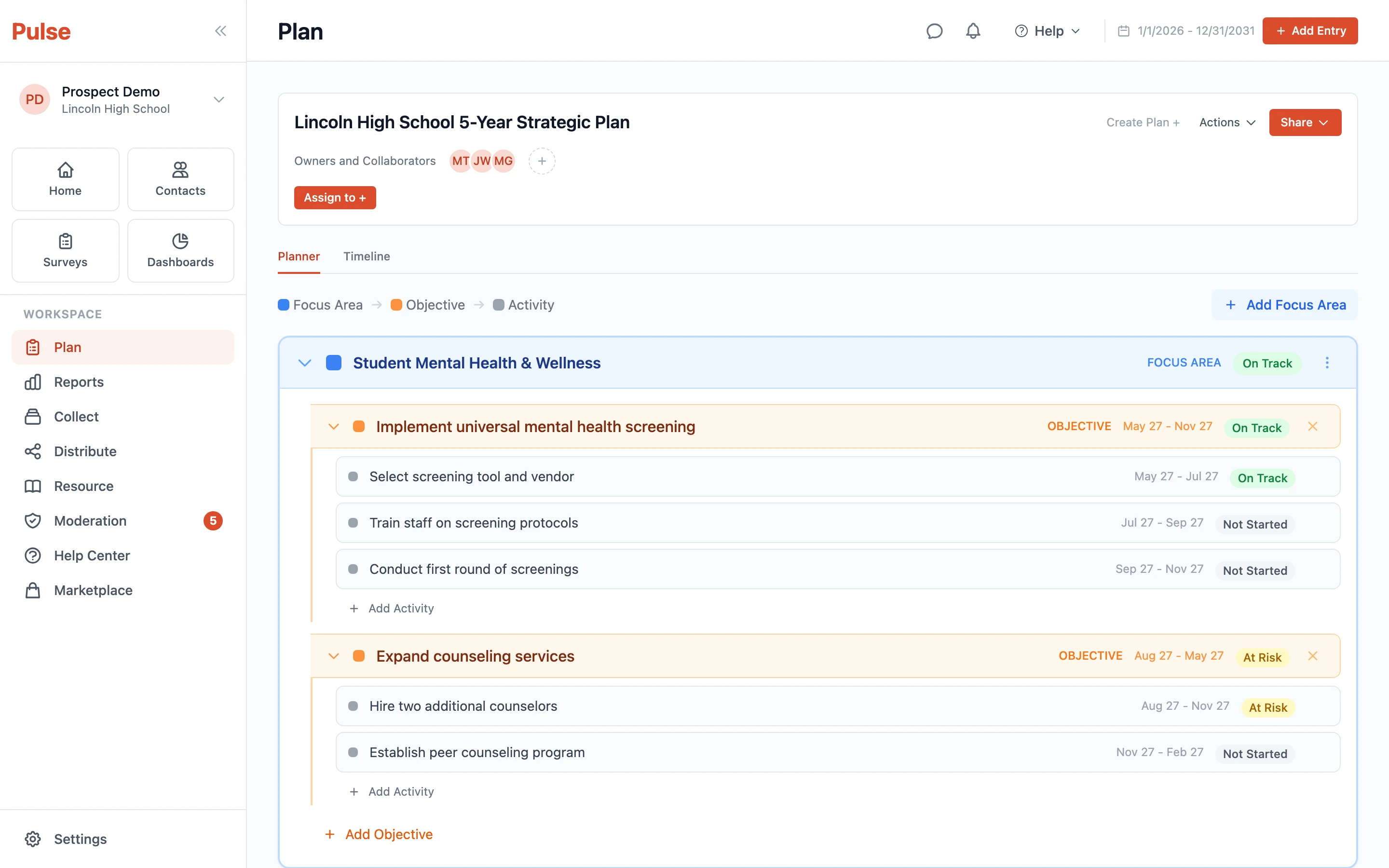
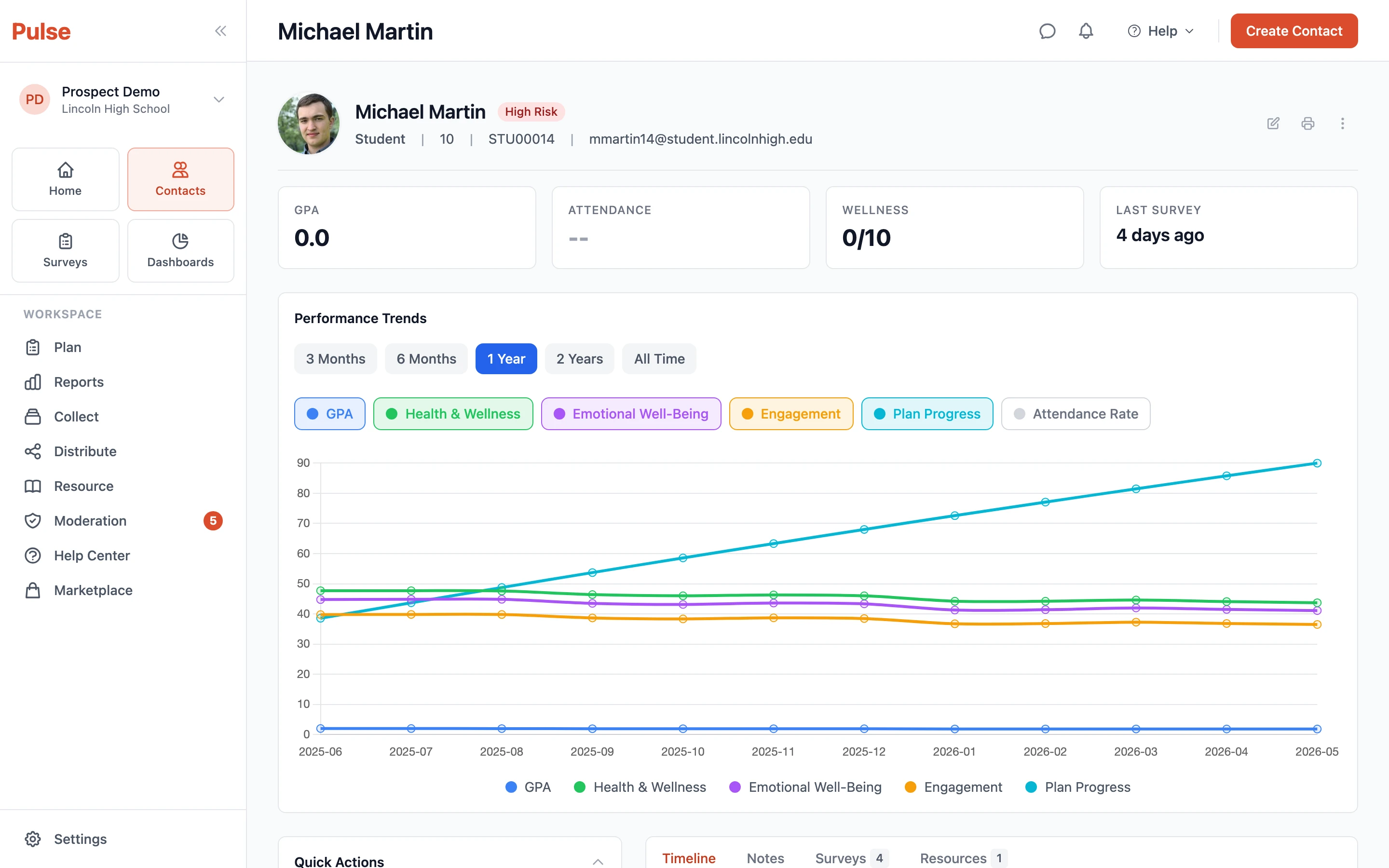
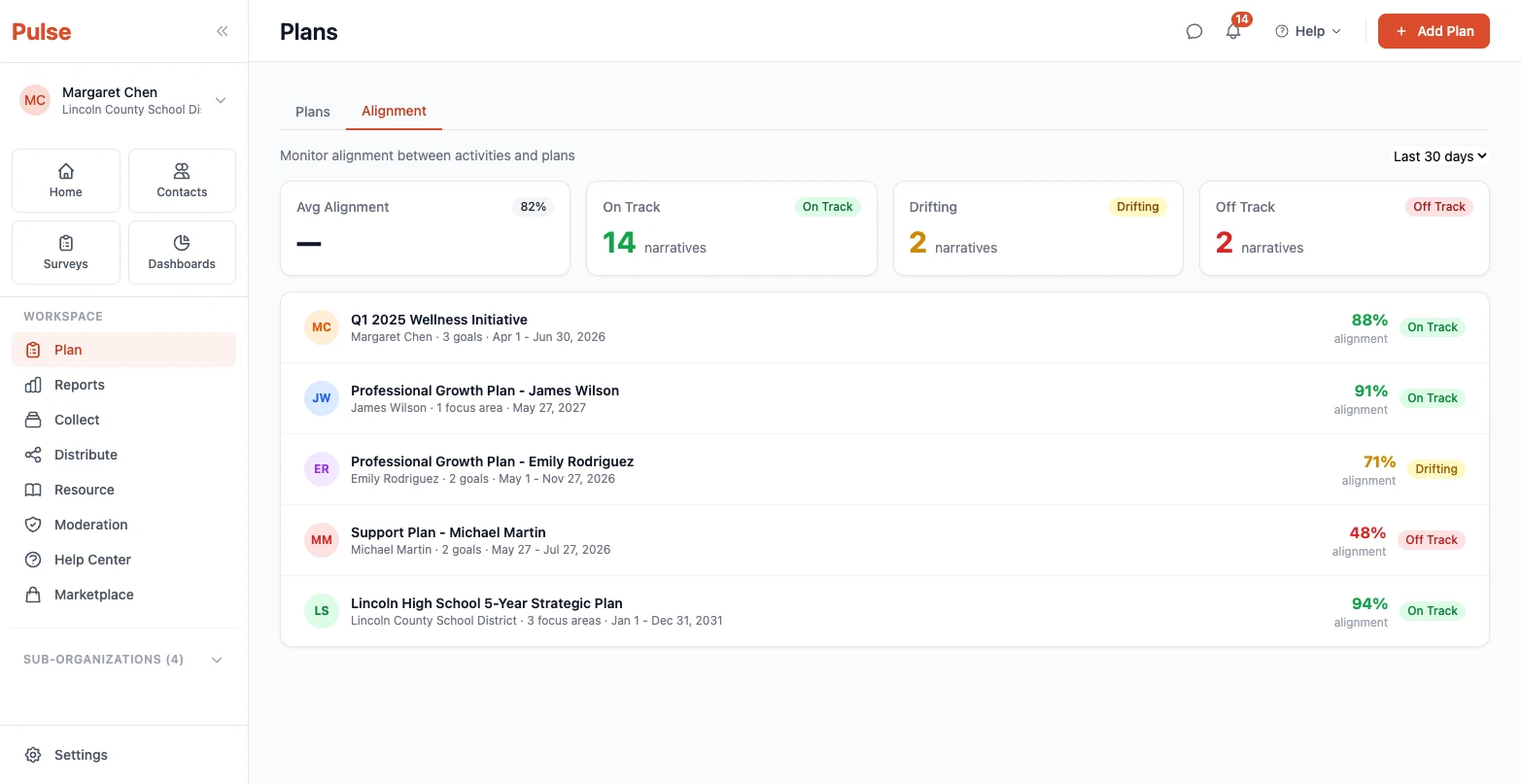
Integration roadmap
The systems your organization already uses.
These integrations are in active development. Early customers help shape which we build first. Tell us what's critical to your workflow below.
Education
Nonprofits
Business CRM & HR
Identity & Collaboration
We are actively expanding our integration library. If there's a system critical to your organization's workflow, we want to know. Your input shapes our roadmap.
Tell us what you needBefore your IT review
Everything your IT director needs. Ready before the meeting.
We're building Pulse for fast implementation, not a multi-month IT project. Your IT team won't be managing an ongoing parallel system.
We provide a technical summary, security documentation, and DPA to any organization that needs IT sign-off before moving forward. Request it when you book the demo.
Integration checklist
- Security documentation available
- DPA available on request
- SSO compatible (Okta, Azure AD, Google)
- Your data is never sold
- Read-only API access by default
- AES-256 encryption at rest
- Built for fast, low-friction setup