Progress Tracking
Most companies can describe their strategy.
Few can prove it worked.
Pulse Connect builds the record of what surfaced, what was done about it, and whether comprehension moved. Automatically, as a byproduct of the cycle. When your board asks for evidence, it is already there.
A complete record. Built automatically. No extra work.
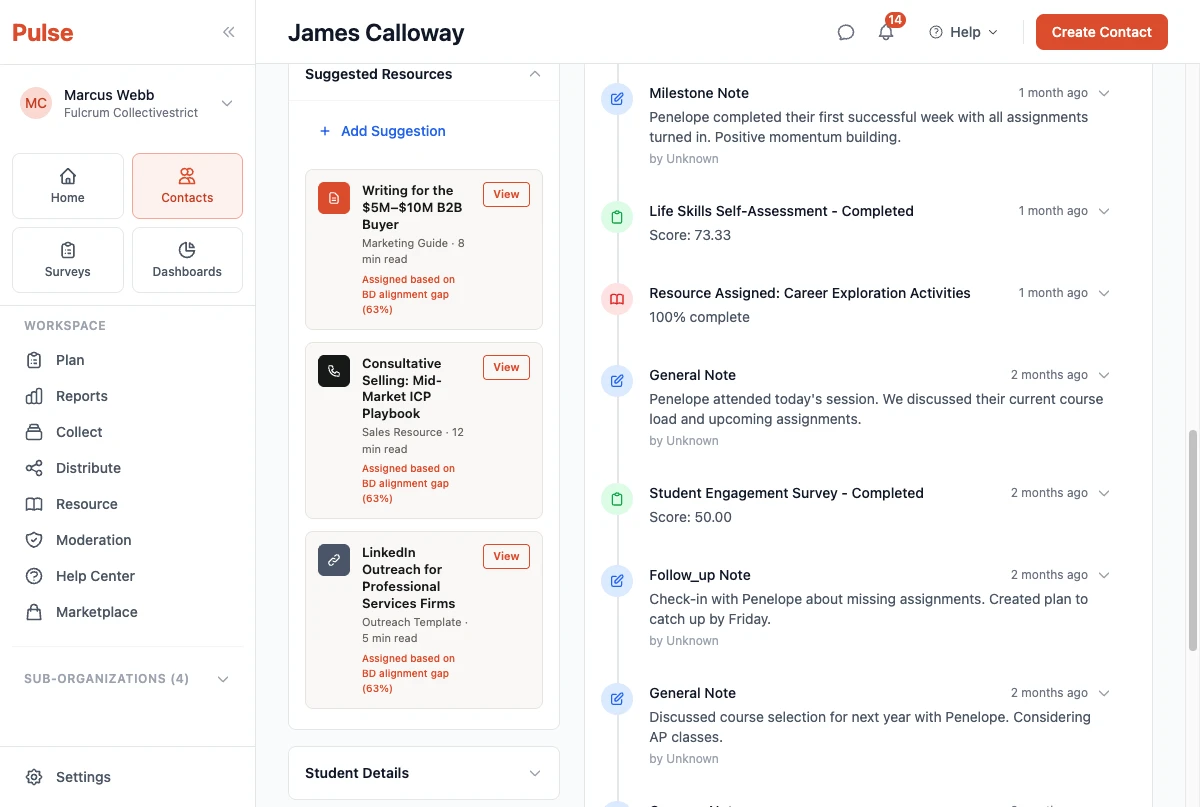
Answered "not sure" on whether the new mid-market focus changes his target list. Two others on the same team answered the same way, which turned a personal question into a group-level finding.
Sent directly to him based on his own answers, not assigned in a meeting. Covers how the mid-market ICP changes qualification and where the old list no longer applies.
One-on-one focused specifically on the Q3 mid-market shift and what it means for his existing pipeline. Logged against the priority, not filed as a general check-in.
Scores on the mid-market priority fell across three consecutive check-ins (71%, 64%, 58%). The threshold rule escalated it before the quarter closed rather than after.
Short module on how messaging changes when the buyer is a committee rather than an owner. Matched to the specific gap his answers surfaced.
Ownership of the mid-market motion moved to a named person after the check-in showed nobody on the team believed they owned it. The decision and its date are on the record.
Why most tracking systems fail
Spreadsheets get abandoned. Dedicated tools need an owner. Pulse Connect builds the record automatically.
Purpose-built tracking tools need a dedicated owner just to stay current. Spreadsheets work until they do not, and then they are missing a quarter. Pulse Connect builds the record as a byproduct of work your team is already doing. No extra steps, no dedicated role, no retroactive entry.
Every gap flagged creates a record entry automatically. No manual logging required.
Every resource assigned gets timestamped and tied to the person's longitudinal record.
Every action closed creates a resolution entry. The audit trail closes itself.
The record survives leadership transitions because it lives in Pulse, not in someone's head or inbox.
What the record contains
Everything that happened. When it happened. What came next.
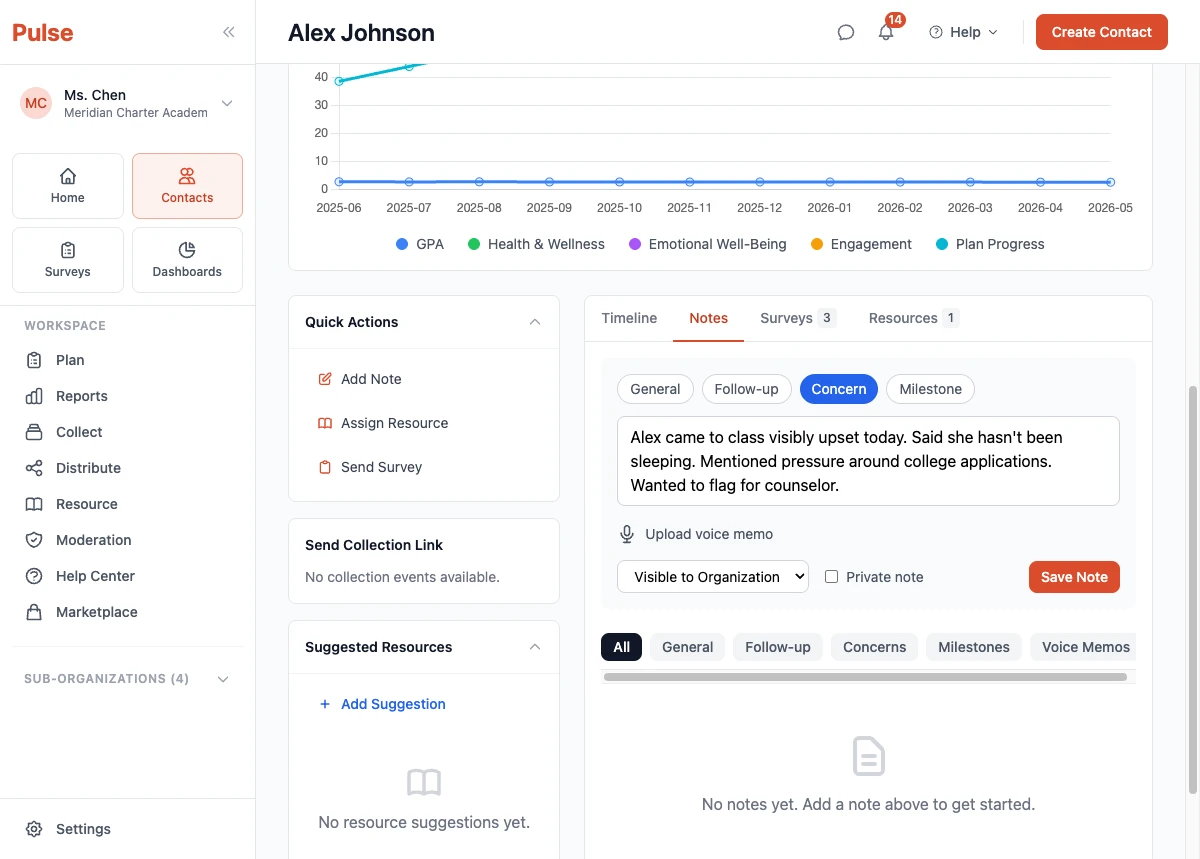
Concerns flagged.
Every concern submitted for this person, with timestamp, type, who flagged it, and how it was routed. The beginning of every support interaction is captured.
Actions taken.
Every action the responder took: resources assigned, meetings held, referrals made. Each with a timestamp and the name of the person who acted.
Resources completed.
Which resources were accessed, which were not, and when. The record shows whether the support actually reached the person, not just whether it was assigned.
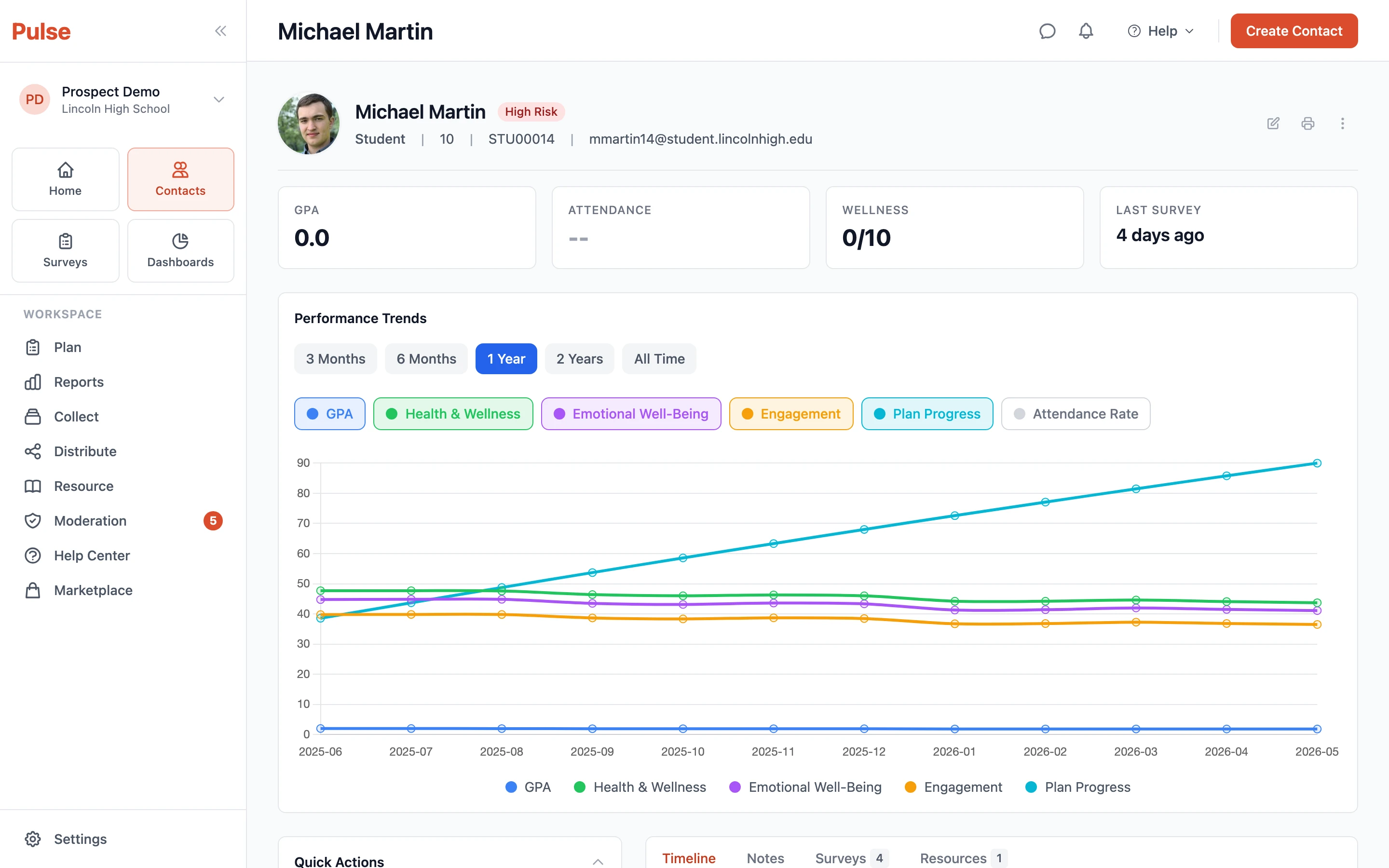
Outcomes measured.
What changed after the action. Whether the gap closed. How long it took. The trend across cycles, quarters, and years.
What changes when you have a complete record
Evidence instead of guesswork. For every audience that asks.
Month 1
You know what was done for each person.
Not what you think was done. What was actually done, when, by whom. A complete picture of every person in your system, without having to chase down notes or check inboxes.
Month 3
You see what's working and what isn't.
Which actions actually close a gap. Which resources get used and which do not. Which priorities keep resurfacing for the same teams. The pattern only a long record can show.
Month 6+
Your board has evidence, not a presentation.
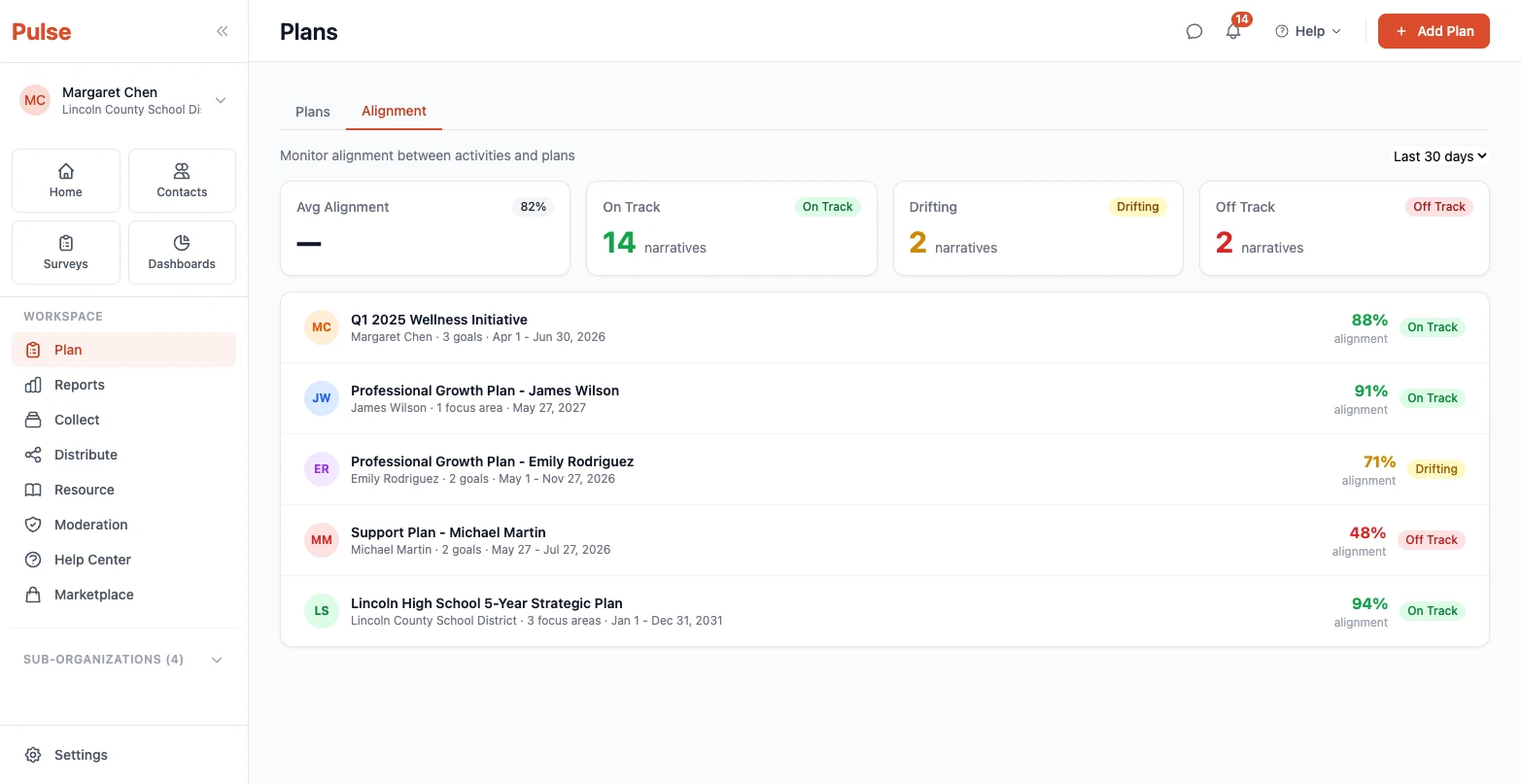
When a board member asks whether your support system is working, you don't need to build a slide deck. You show them the record. Concern volume, resolution rate, time to close. Already there.

What's different about Pulse tracking
No extra steps. The record builds itself.
Every other tracking system requires someone to decide to document something. Pulse builds the record as a byproduct of the work your team is already doing. Flag a concern. The record starts. Route it. The record updates. Close it. The record completes.
That's what makes the record trustworthy. It wasn't assembled for a board meeting. It's what actually happened, captured in real time.
When a leadership team turns over, this record is what survives. The next person inherits evidence rather than a folder of decks and a verbal handoff.
See what a complete support record looks like.
30 minutes. We'll show you the full contact record, the longitudinal view, and how the documentation gets generated automatically.
Book a Meeting